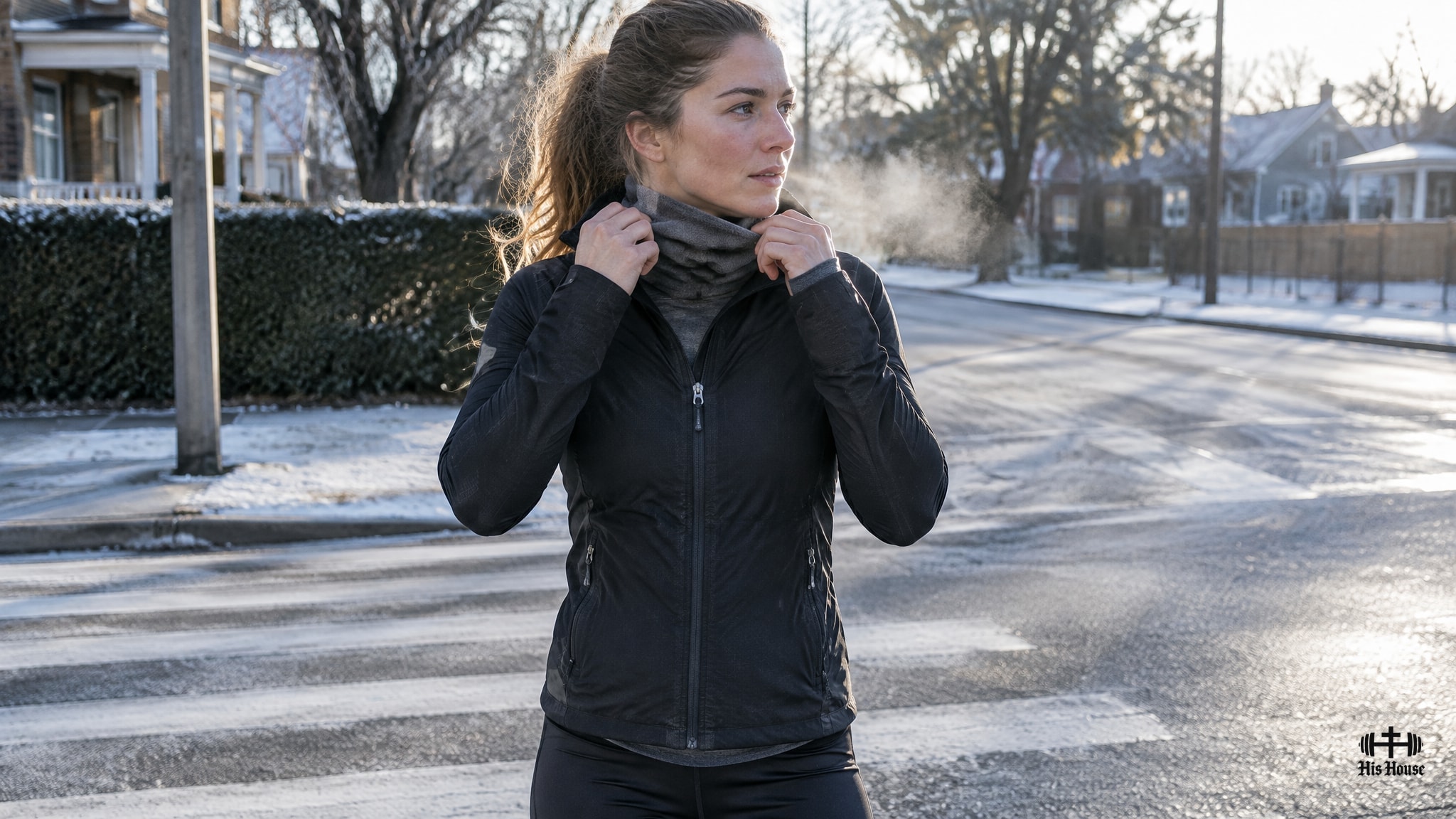
Cold air doesn’t care what your shirt says. It cares what your shirt is made of.
We build His House apparel to carry meaning beyond fashion. But on a frozen road at 6 a.m. the piece still has to do the job. This guide covers Christian cold weather running gear: the fabrics, layers and details that keep you moving, and how to wear your faith on the outside while you do it.
Why Cold Weather Running Needs Its Own Gear
Gym wear never had to handle this. Indoors, the air is still, the temperature is steady and you stop when the set ends.
Outdoors, you get wind on your chest, sweat building under your layers and a pace that keeps changing. You start cold, you heat up fast, then you slow down or stop at a crosswalk and the chill hits.
Picture a typical case. A runner heads out in a cotton tee and a hoodie, feels fine for the first stretch, then gets chilled once the sweat cools during a slower finish. Nothing was wrong with the effort. The clothes were wrong for the job.
That’s why outdoor faith fitness apparel for running has to be judged differently from everyday wear. If you’re after the casual side of the season, our guide to cool-weather faith fitness wear covers it. Here we stay on the run.
What Running Fabric Has to Do in the Cold
Two jobs matter most: move sweat away from your skin, and block wind without turning you into a sauna. Get those right and warmth mostly takes care of itself.
Moisture Management: Why Cotton Fails on Cold Runs
Cotton soaks up sweat and holds it. Wet fabric sits against your skin and pulls heat away, so the moment you slow down, you get cold.
Synthetic fabrics and merino blends do the opposite. They move moisture off the skin and dry faster, so you stay closer to comfortable from the first mile to the last.
When you shop, read the fabric tag, not just the graphic. Look for synthetic or merino content next to the skin. Cotton belongs at the coffee shop after the run.
Windproofing Without Overheating
Wind is easy to underrate. A steady breeze strips heat from your chest and the front of your body, so a wind-blocking front panel can matter as much as extra insulation on a blustery day.
Your back is a different story. It faces away from the wind, and it’s where you sweat most. That’s why the smartest running jackets pair a wind-blocking front with breathable back panels or underarm venting.
Stretch matters too, because a stiff shell fights your stride. A good running layer moves when you move.
One caution: windproof isn’t the same as breathable. A fully sealed jacket traps heat and sweat, and you’ll end up wet from the inside. Block wind where it hits, and let the rest of the piece vent.
Cold Weather Running Layers: Base, Mid, and Shell
Three layers, three jobs. Each one works because of the other two, and together they let you adjust to whatever the run throws at you.
| Layer | Job | What to look for |
|---|---|---|
| Base | Moves sweat off skin | Close fit, synthetic or merino |
| Mid | Holds warmth | Insulating, easy to unzip |
| Shell | Blocks wind and wet | Resistant, still breathable |
Christian Thermal Workout Layers Next to the Skin
The base layer touches your skin, so it sets the tone for everything else. It should fit close and pull moisture outward.
Christian thermal workout layers earn their spot here. A snug long-sleeve base gives you warmth without bulk, and it’s the best place for a short verse or a small mark of faith. Check the product page for fabric details before you buy, and trust what it confirms.
The mid layer comes next. It adds insulation and should be easy to vent. A zip at the neck lets you dump heat in seconds.
Faith-Based Running Jacket as the Outer Shell
The shell is your wall against wind and wet. It should resist both and still let sweat escape.
A faith-based running jacket does this job while carrying your conviction on the sleeve or the back. If you want a deeper read on jackets alone, start with our faith-driven layering jacket guide.
Start the run slightly underdressed. Common running-coach advice says you should feel a little cold in the first few minutes, because your body warms up quickly once the pace settles. If you feel perfectly warm on the doorstep, you’ll be overheated by mile one.
Then manage it on the move. Unzip the mid layer when you heat up. Take off the shell and tie it at your waist if the sun comes out or the hill gets steep. Zip back up when you slow down.
Don’t forget the extremities. Hands, ears and neck lose heat quickly, and a thin hat, gloves and a neck gaiter weigh almost nothing in your pocket.
Fit and Care: Keeping Cold Weather Layers Working
Fit decides whether a layer works. Base layers should sit close to the skin, because a loose one can’t move moisture. Mid layers need enough room to slide under a shell without restricting your arm swing.
Check the sleeves, too. They should still cover your wrists when you raise your arms, or cold air finds the gap. For a wider look at pulling a full kit together, see how to choose a faith workout outfit.
Care matters just as much, because the wrong wash can quietly undo good fabric. Wash cold and skip the fabric softener. Softener can coat fibers and reduce both wicking and water resistance. Air-dry your layers, since high heat can damage elastic and membranes.
Then think rotation. A damp base layer needs time to dry before the next run. For most runners that means at least two base layers in the drawer, with one mid layer and one shell covering the rest. You’ll run more often when you’re never pulling on something clammy.
If you’re buying in order, start with a base layer and a shell. Add the mid layer once you know how your own body runs. That goes for men and women alike.
Visibility and Safety on Dark Winter Routes
Winter runs often start or end in low light. Warmth matters, but being seen matters just as much.
Pick lit routes when you can. Pair reflective pieces with a headlamp or clip light, so you’re visible and you can see the ground.
Reflective Details and Bright Colors
On a dark road, a reflective band on a sleeve or the back of a jacket catches headlight beams. A plain dark layer can blend into the shadows.
Bright colors do the same work in the daylight hours you do get. Choose a brighter shell over a black one when your route shares the road with cars. Check each product page for reflective details, and don’t assume a piece has them.
Reflective trim is a help, not a guarantee. It doesn’t replace a light, and it won’t protect you on a route where drivers can’t see you coming.
Scripture Motivation for Cold Miles
The first mile in the cold is the hardest. Your lungs burn, your legs argue, and the couch makes its case.
A short verse on your base layer gives you something to return to. Glance down, breathe, go again. That’s what faith-meets-fitness means to us: the message is the reason you wear it, and the run is where it gets tested.
Be clear about one thing. A verse never replaces moisture-moving fabric. A scripture shirt in cotton will look great and run badly.
Choosing a Scripture Running Shirt That Works in the Cold
A scripture running shirt should read as modern, not churchy. Look for short phrases, clean type and placement on the chest, back or sleeve. Skip anything that looks like a church bulletin.
Then check the fabric. Call a shirt cold-ready only when the product page confirms a moisture-moving material. If it doesn’t, wear it as a warm-weather piece or a top layer for the walk to the car.
Faith-based gear doesn’t have to give up performance for its message. It only does when you buy on the graphic and ignore the tag. Pick for fabric and fit first, then for the verse.
Shopping for a specific fit? Try our guides on scripture workout shirts for women and faith gym t-shirts for men.
Seasonal Picks for Cold Weather Running This Winter
Winter 2026 into 2027 will hand you wind, wet and bitter mornings, often in the same week. So we organize picks by condition. In each case you’re choosing from four categories: a faith-based running jacket, a thermal base layer, a scripture running shirt and bottoms, with men’s and women’s versions of each.
Christian Workout Clothes for Wind and Wet Routes
Wind and wet call for a shell first. Choose a wind- and water-resistant jacket with a blocking front and venting where you sweat most. Put a close-fitting thermal base under it and a scripture shirt in a moisture-moving fabric beneath or over, depending on the temperature.
For bottoms, pick something that stretches with your stride and holds up in the breeze. Pockets help too, since keys and a phone need somewhere to live. Our leggings with pockets guide is the place to look.
Christian Workout Clothes for Calm, Bitter-Cold Mornings
On still, freezing mornings, insulation outranks wind protection. Lean on your thermal base layer and a warmer mid layer, and keep a lighter shell for the way home or a change in the weather.
You’ll still sweat, so don’t pile on layers you can’t unzip. Everything you wear should be easy to vent. If it isn’t, you’ll overheat in ten minutes.
Want a full kit in one go? Browse bundle deals on faith gear.
If you’d like to hear when His House cold-season pieces land, sign up for our updates. No pressure. Orders over $109 ship free in the US.
Wear something that MEANs something. Then go run.
Frequently asked questions
What type of clothing is best for working out in cold weather?
Layers. Start with a close-fitting base that moves sweat off your skin, add an insulating mid layer you can unzip, and finish with a wind- and water-resistant shell. Avoid cotton against the skin, because it holds sweat and leaves you chilled once you slow down.
How many pairs of gym clothes should I have for winter running?
Keep at least two base layers in rotation so one can dry while you wear the other. One mid layer and one shell usually cover the rest. If you run most days, add a third base layer.
What are the best winter workout clothes for men?
Buy a moisture-moving base layer and a wind-resistant shell first, then add a mid layer. The same order works for women. Cover your hands, ears and neck with light accessories, and check each product page for fabric details.
Does faith-based running gear give up performance for its message?
Not if you choose by fabric first. A scripture shirt in a moisture-moving material works as well as any other base layer. Cotton is the problem, whatever the print says, so check the product page before you buy.
Leave a Reply