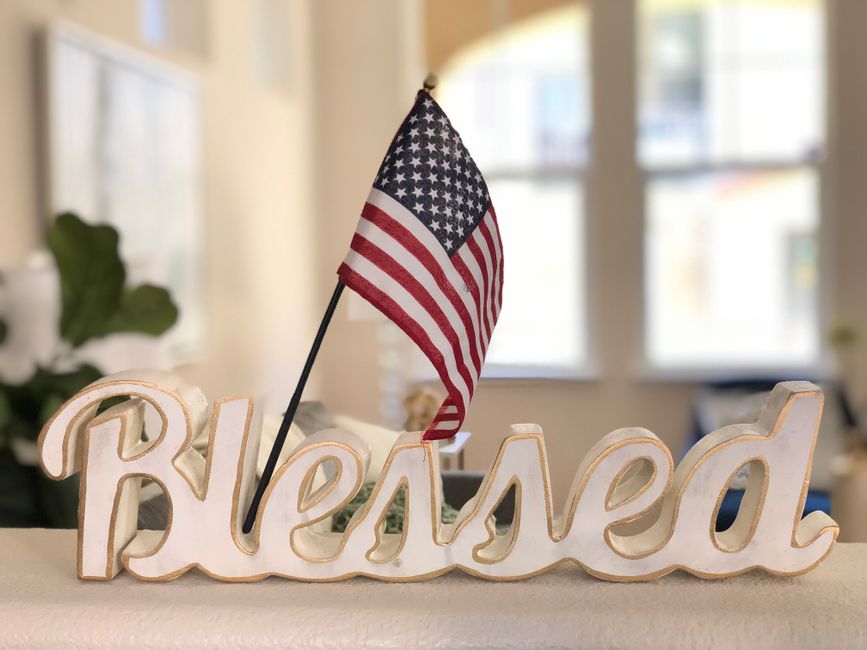
There are moments in history when a celebration transcends fireworks and parades. This July 4th marks the 250th anniversary of the United States of America, a milestone that invites us to reflect not just on where we have been, but on who we are called to be. For those of us who follow Christ, that reflection runs deeper than patriotism. It reaches into the very core of our identity: people whose bodies are temples of the Holy Spirit, whose strength is a gift from God, and whose freedom, both spiritual and physical, carries a sacred responsibility.
Table of Contents
- The Sacred Connection: Why Your Body Is “His House”
- Fitness as an Act of Freedom: Breaking the Chains of Sickness and Decay
- Taking Care of Yourself to Take Care of Each Other: The Collective Calling
- Practical Ways to Build a Faith-Fitness-Freedom Routine
- A Call to Action: Join the Movement of Faithful Stewards
We often treat faith, fitness, and freedom as separate compartments of life. Faith belongs to Sunday mornings. Fitness belongs to the gym. Freedom belongs to history books and national holidays. But scripture paints a different picture, one where these three threads are woven together into a single calling. Your body is not an afterthought in your spiritual life. It is the vessel through which you serve, love, and worship. Your physical health is not a vanity project. It is a declaration of independence from the decay that seeks to limit your purpose. As we explore this connection, you will see how wearing Christian workout clothes is one small but powerful way to declare that your faith, fitness, and freedom are inseparably linked.
The Sacred Connection: Why Your Body Is “His House”
The Apostle Paul asked a question that still cuts to the heart of how we view ourselves: “Do you not know that your bodies are temples of the Holy Spirit, who is in you, whom you have received from God?” The answer, found in 1 Corinthians 6:19-20, reshapes everything. You are not merely a soul housed temporarily in flesh. Your body is sacred ground. It is His house.

This truth reframes physical health as an act of worship. When you care for your body, you are not chasing an image or bowing to cultural pressure. You are stewarding property that belongs to God. Just as you would not neglect a church building, allowing the roof to cave in and the walls to crumble, you are called to maintain the dwelling place God chose for His Spirit. Prayer and scripture reading nourish the soul, but movement, nutrition, and rest honor the physical temple where that soul resides.
The world around us promotes fitness for reasons that often ring hollow. It sells six-pack abs as the pinnacle of achievement. It equates worth with appearance. It turns exercise into a competition of comparison. The biblical view stands in stark contrast. Physical training is not about ego. It is about preparation. It is about building a body capable of carrying out God’s work for as long as He calls you to it. A strong back helps a neighbor move. A healthy heart lets you chase grandchildren around the yard. Endurance built through consistent discipline prepares you for mission trips, long days of service, and the unexpected needs of your community. When you honor His house, you are quietly saying, “Lord, make me ready for whatever You ask of me.”
Fitness as an Act of Freedom: Breaking the Chains of Sickness and Decay
Freedom is a word that echoes through American history. We speak of it with reverence. We celebrate those who sacrificed to secure it. Yet there is a quieter battle for freedom that each of us faces every day: the fight against the slow creep of physical decline. Sickness, fatigue, and the limitations of a neglected body can become a kind of captivity. They steal your energy. They narrow your world. They reduce your capacity to show up fully for the people who need you.
This is not about the unavoidable trials of illness that come despite our best efforts. Those are burdens carried in faith, and God’s grace is sufficient in them. But for many of us, a significant portion of our physical suffering is preventable. The Centers for Disease Control and Prevention has long reported that chronic conditions like heart disease, type 2 diabetes, and certain cancers are closely linked to lifestyle factors including physical inactivity and poor nutrition. These are not random afflictions. They are, in many cases, the wages of neglect.
Spiritual freedom from sin and physical freedom from preventable disease share a common thread: both require intentionality. You do not stumble into a life of holiness, and you do not stumble into a life of health. Both demand daily choices. Both involve saying no to impulses that promise pleasure but deliver bondage. When you choose to move your body, you are exercising a kind of liberty. You are declaring that you will not be enslaved by lethargy. You are breaking chains before they have a chance to form.

The 250th anniversary of our nation offers a powerful metaphor here. The founders of this country understood that liberty is not passive. It must be defended, nurtured, and passed down. Your health operates the same way. The freedom to hike a mountain trail, to lift your child onto your shoulders, to serve at a shelter without being winded, to live without the fog of constant exhaustion: these are liberties worth fighting for. And the fight is not selfish. A free, healthy believer is a weapon in God’s hand, ready to be deployed for His purposes.
The Cost of Neglect vs. The Reward of Stewardship
Neglecting the body carries a quiet price tag. It shows up as chronic fatigue that makes you irritable with your family. It manifests as brain fog that dulls your ability to engage with scripture. It steals years from the back end of your life, years that could have been spent mentoring, serving, and enjoying the goodness of God. The tragedy of neglect is not just a shortened lifespan. It is a diminished capacity to love well during the years you do have.
The reward of stewardship, by contrast, is not a flawless physique. It is vitality. It is the clear mind that rises early to pray. It is the stamina to play with your kids without counting the minutes until you can sit down. It is the strength to help a friend move on a Saturday and still show up for church on Sunday. This is a journey, not a destination of perfection. Small, consistent steps, a walk after dinner, a workout before breakfast, a glass of water instead of a third cup of coffee, are acts of faithfulness. God honors the small offering of a willing heart.
Taking Care of Yourself to Take Care of Each Other: The Collective Calling
Western culture has a habit of turning everything into an individual pursuit. Fitness becomes about “my goals,” “my body,” “my transformation.” But scripture never treats our physical existence as a solo project. You are part of a body, the body of Christ, and your individual health ripples outward into the lives of everyone you touch.
Think about the people who depend on you. Your spouse needs a partner who can walk through decades of life with energy and presence, not one sidelined by preventable conditions. Your children need a parent who models discipline and can physically engage with their world. Your church needs members who can set up chairs, cook meals for the grieving, and stand on their feet to greet newcomers. Your nation needs citizens who are alert, capable, and ready to contribute. A country is only as resilient as the people within it. A church is only as strong as the hands and feet of its congregation.
Being physically capable unlocks practical service in ways we often overlook. The ministry that needs someone to move heavy tables before an event. The elderly neighbor who cannot shovel snow from her driveway. The crisis pregnancy center that needs volunteers to stand outside for hours in prayer. The mission trip that requires hiking into a remote village. These are not hypothetical scenarios. They are the daily fabric of a life poured out for others. When you are too tired, too weak, or too sick to respond, the collective suffers.
There is also a visual dimension to this calling. When you step into a gym or onto a running trail wearing apparel that declares your faith, you are not just covering your body. You are joining a visible community of believers who refuse to separate the spiritual from the physical. You are silently telling the person next to you, “I am here to honor God with my body, and you are not alone in this pursuit.” That quiet witness matters. It sparks conversations. It builds bridges. It reminds a watching world that faith is not confined to a pew.
Honoring Our Country Through Honoring Ourselves
On this 250th anniversary of American independence, we have a unique opportunity to redefine what patriotism looks like. It is right and good to wave flags and watch fireworks. But there is a deeper patriotism that asks, “How can I strengthen this nation from the inside out?” A country built on the idea of liberty requires citizens who are free enough, strong enough, and clear-minded enough to steward that liberty well.
Investing in your health is an investment in the human capital of the United States. It reduces the burden on a strained healthcare system. It increases your productivity and your ability to serve your local economy and community. It positions you to be a contributor rather than a dependent. This is not about political ideology. It is about gratitude for the freedom we have been given and the responsibility to carry it forward with strength. A nation of healthy, faithful, disciplined people is a nation that can withstand storms. Self-care, pursued with the right heart, is not self-indulgence. It is a quiet form of national service.
Practical Ways to Build a Faith-Fitness-Freedom Routine
Knowing why you should honor your body is one thing. Building a rhythm that actually does it is another. The key is to weave faith directly into the fabric of your physical activity so that the two become inseparable. Start with prayer. Before your feet hit the treadmill or your hands grip the barbell, pause and dedicate the effort to God. A simple prayer like, “Lord, I offer this workout to You. Use it to make me stronger for Your purposes,” transforms exercise from a chore into an act of worship.
Scripture memorization pairs beautifully with physical training. The rhythm of running lends itself to repeating a verse with each footfall. The strain of a heavy lift creates a moment of dependence where Philippians 4:13, “I can do all this through him who gives me strength,” becomes more than a slogan. It becomes a breath prayer. Try setting what you might call “temple goals” rather than just aesthetic goals. Instead of “I want to lose fifteen pounds,” reframe it: “I will honor God by running three times this week so I can keep up with my kids.” The motivation shifts from self-image to faithful stewardship, and that shift makes consistency far more sustainable.
Removing practical barriers also matters. Having gear that supports your movement helps you focus on the spiritual and physical work rather than on discomfort. A moisture-wicking top keeps you cool during a summer run. Supportive shorts let you move freely through a full range of motion. When your clothing works with you instead of against you, one less obstacle stands between you and the consistency you are building. For those looking to outfit themselves fully for this lifestyle, free shipping on orders over $125 at honorhishouse.com makes it easier to build a complete wardrobe without hesitation.
Fueling the Temple: Simple Nutrition Principles
Nutrition does not need to be complicated or legalistic. Food is fuel for God’s work, not a source of guilt or obsession. Focus on whole foods that give you steady energy: lean proteins, colorful vegetables, fruits, nuts, and plenty of water. Think of your meals as an opportunity to thank God for provision and to ask Him for the energy to serve well. Hydration matters just as much as food. A body that is even mildly dehydrated struggles to think clearly and perform physically. Rest, too, is part of honoring the temple. Sleep is when the body repairs and the mind resets. Treat your bedtime as a spiritual discipline, a way of acknowledging that you are a creature with limits, dependent on God to sustain you.
A Call to Action: Join the Movement of Faithful Stewards
Faith gives you your identity. Fitness puts that identity into action. Freedom is the result, a life unshackled from preventable limitation, ready to pour out for God and for others. These three pillars stand together, and they cannot be separated without weakening the whole structure.
This July 4th, as the nation marks two and a half centuries of liberty, make a personal declaration. Declare your independence from mediocrity. Declare your dependence on Christ. Commit to treating your body as His house, not out of vanity, but out of reverence. Commit to moving, eating, and resting in ways that expand your capacity to love and serve. You do not need to do it perfectly. You only need to begin.
Share your journey with others. Use a community hashtag like #HonorHisHouse to connect with fellow believers who are walking this same path. Let your small steps of obedience become a collective testimony. May God bless you with strength for your body, peace for your mind, and a heart that beats with gratitude for the freedom we have in Christ and in this nation. May His house, your body, stand strong for all the days He gives you.
Leave a Reply