Whether you are new to the gym or a seasoned lifter, core workouts at the gym can become a powerful act of worship. At HIs House, we believe your fitness journey is a form of stewardship, a way to honor the body God entrusted to you. This guide is not about chasing a fleeting aesthetic or comparing your midsection to someone else’s highlight reel. It is about building a functional, resilient center that supports every lift, every run, and every moment you spend serving your family, your church, and your community. You will learn the anatomy of a faith-focused core session, walk through a complete workout plan, and discover how to weave prayer and scripture into every rep. By the end, you will have a clear path to strengthening your core while deepening your walk with Christ.
Table of Contents
- Why Core Strength Matters for the Faith-Driven Athlete
- The Anatomy of a Faith-Focused Core Workout at the Gym
- A Sample Core Workout Plan for the Gym (Beginner to Intermediate)
- Common Mistakes to Avoid in Your Core Workouts at the Gym
- How to Build a Consistent Faith and Fitness Routine in 2026
- Frequently Asked Questions About Core Workouts at the Gym
- Conclusion: Train Your Core, Honor His House
Why Core Strength Matters for the Faith-Driven Athlete
Your core is far more than a set of abdominal muscles that show up in the mirror. It is the complex network of muscles that stabilizes your spine, pelvis, and hips, and it acts as the anchor for nearly every movement you make. When you steward the body God gave you, a strong core is foundational. It protects your lower back during heavy lifts, improves your posture during long days at a desk or on your feet, and reduces the risk of injury that could sideline you from the activities you love.

A stable core also amplifies your performance in every other area of fitness. Whether you are squatting, pressing, running, or simply lifting your children into the air, power radiates from your center. When your core is weak, energy leaks out and other muscles compensate, often leading to strain. When it is strong, you move with efficiency and confidence, carrying more energy into your service to others.
There is a spiritual metaphor here worth holding onto. Just as Christ is the center of your spiritual life, your physical core is the center of your body’s strength. A life without Christ at the center becomes imbalanced and unstable. A body without a strong core follows the same pattern. When you train your core, you are building a physical reminder of what it means to keep your faith central, upright, and steady. This is not about sculpting a six-pack for vanity. It is about cultivating functional strength that supports an active, mission-driven lifestyle, a body ready to do the work God has prepared for you.
The Anatomy of a Faith-Focused Core Workout at the Gym
Warm-Up: Preparing Your Body and Heart
Before you touch a weight or assume a plank position, take five minutes to prepare both your body and your spirit. Start with light cardio on a treadmill, bike, or rower. Use this time to quiet your mind. Instead of scrolling on your phone, listen to worship music or recite a verse like Philippians 4:13: “I can do all this through him who gives me strength.” Let the rhythm of your movement become a rhythm of gratitude.
Follow the cardio with dynamic stretches that wake up your spine and hips. Cat-cow stretches mobilize your vertebrae, bird-dogs activate the connection between your core and your limbs, and gentle torso twists open your obliques. Before you begin the work, pause and offer a short prayer. Dedicate the session to God. Ask for focus, for protection from injury, and for a heart that worships even while it sweats.
The Main Circuit: Compound Core Movements
The heart of your session should feature movements that challenge your core from multiple angles. Avoid the trap of doing hundreds of crunches and calling it a day. Instead, choose exercises that demand stability, control, and full-body coordination.

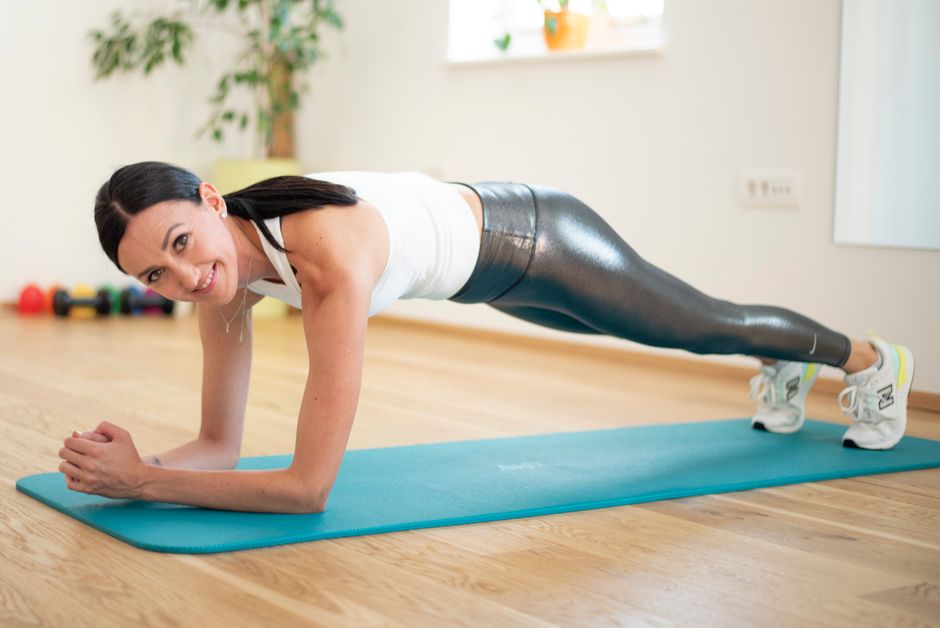
Plank variations are a cornerstone. A front plank held for 30 to 60 seconds teaches your entire core to fire as one unit. Side planks target the obliques and the often-neglected quadratus lumborum. As you hold each position, focus on alignment. Imagine a straight line running from your head to your heels, and let a spiritual cue anchor your mind: “Stand firm in your faith.”
Cable woodchoppers introduce rotational strength, which is critical for sports, yard work, and everyday twisting motions. Set a cable pulley to shoulder height, grasp the handle with both hands, and rotate your torso while keeping your hips stable. Control the weight through the entire range of motion. Let the motion remind you to cut away distractions that pull you from your purpose.
Hanging knee raises target the lower abdominals with intensity. If you are still building strength, use an assisted pull-up machine or perform the movement lying on a bench. Lift your knees with control, avoiding the temptation to swing. As you raise your legs, lift your eyes and your heart: “I lift my eyes to the hills, where does my help come from?”
Dead bugs round out the circuit with a focus on coordination and deep stabilization. Lie on your back, extend your arms toward the ceiling, and slowly lower opposite arm and leg while keeping your spine pressed into the floor. The movement is slow and deliberate. Let it become a physical meditation: “Be still and know that I am God.”
Finisher: Core Stability and Breathwork
Finish your session with exercises that challenge your core’s ability to resist movement, which is its primary job. The Pallof press, performed with a cable or resistance band, is an anti-rotation exercise that builds deep stability. Stand perpendicular to the anchor point, press the handle straight out, and hold. Your core must fight to keep you from twisting.
Then, drop into a breathing plank. Hold a standard plank while taking five deep, controlled breaths. Focus on expanding your ribcage laterally rather than letting your belly sag. This teaches your core to stabilize under the demand of respiration, a skill that carries over to heavy lifts and stressful moments alike.
Close with a cool-down that honors the work you just completed. Child’s pose releases the lower back, and seated spinal twists restore mobility. Use this quiet window for a closing prayer of thanks. Thank God for the strength to move, for the health to pursue Him actively, and for the opportunity to grow.
A Sample Core Workout Plan for the Gym (Beginner to Intermediate)
This routine is called “The Steadfast,” and it takes about 20 minutes. It is designed to be accessible if you are newer to the gym while offering enough challenge to keep intermediate athletes engaged.
Begin with three minutes of dynamic stretching and your opening prayer. Then move into the circuit. You will perform three rounds of the following four exercises, working for 45 seconds and resting for 15 seconds between each.
First, a plank hold. Keep your body in a straight line and breathe steadily. Second, cable woodchoppers, completing 10 controlled reps per side. Third, dead bugs, with 10 slow reps per side. Fourth, bird-dogs, also 10 reps per side, focusing on reaching long through your fingertips and heels.
After three rounds, move to the finisher: two rounds of Pallof presses, 10 reps per side, holding the extended position for a full second each time. Then settle into child’s pose for a cool-down. As you stretch, meditate on Psalm 18:32: “It is God who arms me with strength and keeps my way secure.”
To progress over time, add five seconds to your plank holds each week or increase the cable weight by five pounds. Use the rest periods intentionally. Instead of checking your phone, whisper a verse or thank God for the strength to complete another set. And remember your gym etiquette: wipe down the equipment you use and carry yourself in a way that reflects the light of Christ to others in the weight room.
Common Mistakes to Avoid in Your Core Workouts at the Gym
Even with the best intentions, certain habits can undermine your progress and increase your risk of injury. The first is relying on momentum. When you swing your legs during hanging knee raises or twist rapidly through woodchoppers, your core disengages and other muscles take over. Slow down. Feel the muscle work through every inch of the movement.
Holding your breath is another common error. It spikes your blood pressure and reduces the stability your core can provide. Exhale during the exertion phase of each exercise and inhale during the release. This rhythm keeps you grounded and safe.
Many people also ignore the lower back, treating the core as if it only exists on the front of the body. A truly strong core includes the erector spinae and the deep muscles that support your spine. Incorporate back extensions or supermans into your routine to build balance and resilience.
Perhaps the most damaging mistake is comparing your progress to someone else’s. Your fitness journey is a personal covenant between you and God. Another person’s speed, strength, or appearance has no bearing on your calling. Focus on consistency, not perfection. Show up, do the work, and trust the process.
Finally, skipping the spiritual component reduces your workout to mere exercise. A session without prayer or reflection misses the opportunity to connect your physical discipline with your faith. Invite the Holy Spirit into your reps. Let your training be a conversation.
How to Build a Consistent Faith and Fitness Routine in 2026
Consistency is the soil where transformation grows, and it requires more than willpower. It requires a structure that honors your commitment. Start by setting a “sacred time” for your workouts. Treat your gym sessions as appointments with God, not as optional chores. Schedule them into your calendar with the same seriousness you give a church service or a Bible study.
Use scripture as fuel during your training. Create a playlist of verses set to music or simply listen to an audio Bible during your warm-up and cool-down. Passages like Isaiah 40:31 and Joshua 1:9 can reframe your fatigue as reliance on God’s strength. The Bible is the ultimate pre-workout, nourishing your spirit while you challenge your body.
Faith-based fitness thrives in community. Find a workout partner or a small group at your church who shares your values. Accountability and encouragement multiply your consistency and joy. When you train together, you sharpen one another as iron sharpens iron.
Equipping yourself with purpose also matters. When you wear gear that reflects your mission, it serves as a tangible reminder of why you train. The Hawaiian Inspired T-Shirt Collection and Faith and Fitness Workout Starter Bundles from HIs House let you carry that identity into every set. Stepping onto the gym floor in apparel that declares your faith can shift your mindset from self-focus to stewardship.
Keep a journal that tracks both your physical progress and your spiritual reflections. Note the weights you lifted and the verses that resonated. Over time, you will see a record of God’s faithfulness woven through your discipline.
Frequently Asked Questions About Core Workouts at the Gym
Can I build a strong core without doing crunches? Yes. Planks, dead bugs, Pallof presses, and bird-dogs are highly effective at building stability and strength while being safer for your spine than traditional crunches or sit-ups.
How often should I train my core? Two to three times per week is ideal. Your core muscles are engaged during compound lifts like squats and deadlifts, so they need adequate recovery time just like any other muscle group.
What if I have lower back pain? Focus on anti-extension exercises such as planks and bird-dogs, and avoid movements that flex the spine repeatedly under load, like sit-ups. Always consult a doctor or physical therapist before starting a new routine if you have existing pain.
Is it okay to listen to worship music while lifting? Absolutely. Worship music can help you stay focused and set a Spirit-led tone for your entire session. Many athletes find it deepens their sense of purpose during training.
Where can I find faith-based workout gear? HIs House offers Men’s and Women’s Workout Wear, Unisex Tops and Bottoms, and Accessories Starter Bundles that help you represent your faith with style and quality. You can also explore the full collection of product bundles to find everything you need in one place. Plus, enjoy Free US Shipping on orders $99+.
Conclusion: Train Your Core, Honor His House
A strong core is not just about looking good. It is about being ready for the work God has called you to do. Every rep is an offering. Every plank is a posture of prayer. When you train your center, you are building a body that can serve, a heart that can endure, and a spirit that remains anchored in Christ.
Keep showing up for Him. As you build your fitness wardrobe, consider pieces that reflect your identity in Christ. The Digital Products, including the Music Album Honor His House by airV, can provide a soundtrack for your next session, filling your ears with sounds that point you back to your purpose.
Lord, let my body be a living sacrifice. Strengthen my core and my faith. Amen.
Leave a Reply