
The answer to “do you wear underwear with swim trunks?” is no, if the trunks have a built-in liner. That liner is there so you can skip the wet cotton brief that bunches under the shell, sags when you stand up out of the water, and stays damp for twenty minutes after the rest of you feels dry.
It is a garment question, not a rule about personal style. The useful detail is what kind of trunks you have and what their lining is designed to do.
Why The Confusion Exists
Some of the confusion is generational. Unlined board shorts were common for years, and they genuinely did need an underlayer for support and coverage. But “board shorts” and “swim trunks” are not the same garment, even though people have used the names interchangeably for a long time.
Board shorts tend to have a longer, looser cut and often no built-in liner. Many classic swim trunks have a shorter cut and a sewn-in lining. Both have been sold as “swim trunks” over the years, and most shoppers were never told what to look for inside the waistband. It’s no wonder people are still asking.
If you have ever looked up board shorts vs swim trunks and come away more confused than when you started, that is why. The two names ended up describing the same shelf in the same store. The lining is the difference that actually changes how you wear them.
What A Liner Actually Does
A liner does the underwear job. First, it holds everything in place so you can swim, walk, and move without stopping to adjust your shorts. Second, it adds a layer between you and wet outer fabric. Some shells cling when soaked or turn slightly translucent, and the liner means the shell is not the only thing between you and the world.
Third, it gives your skin a soft layer between it and the outer shell. That can make a difference when seams, stitching, or hardware would otherwise sit directly against you as you move. A liner is not a medical device, and it cannot guarantee you will never chafe. It does reduce one common source of irritation: rough or shifting outer fabric rubbing directly against skin.
The Exception: When You Do Wear Underwear With Swim Trunks
Unlined trunks are the exception. If there is no built-in layer, wearing something underneath can give you the coverage and support you want. The right choice is a swim-specific brief or compression short designed to get wet and move with you.
Regular cotton underwear is a poor substitute. Cotton absorbs water, gets heavy, and stays damp against the skin. It also dries far more slowly than the rest of your suit. So, if you are wondering, “do you wear underwear under swim trunks,” the practical answer is: only when the trunks are unlined, and then choose an underlayer made for swimming rather than your everyday cotton briefs.
Not sure which style you own? Turn the trunks inside out and check. If you see a sewn-in liner, that is the layer to wear. For more on choosing fit, coverage, and fabric, read our Christian swimwear buying guide.
The Types, In Plain Words
Traditional mesh is the familiar open-net lining. It feels light, drains water quickly, and usually dries faster than a thicker lining. The tradeoff is comfort: some mesh feels scratchy, can shift or bunch, and may lose its shape with wear. It can stay put well enough for a relaxed swim, but a loose cut may need more adjusting during active movement.
Softer micro-mesh uses a finer, smoother-feeling mesh. It still lets water pass through and tends to dry quickly, but it is often gentler against skin than traditional netting. The close weave can feel a little warmer or hold a little more water than open mesh. A good fit keeps it in place without the rough, loose feel some people dislike.
A brief liner gives you a simple, close-fitting layer without the leg coverage of a boxer-brief. It usually feels smoother than open mesh and can stay secure when the cut fits well. The solid fabric holds more water than mesh, so it may take longer to dry. Check the leg openings: if they pinch or shift, the liner may become noticeable as soon as you start moving.
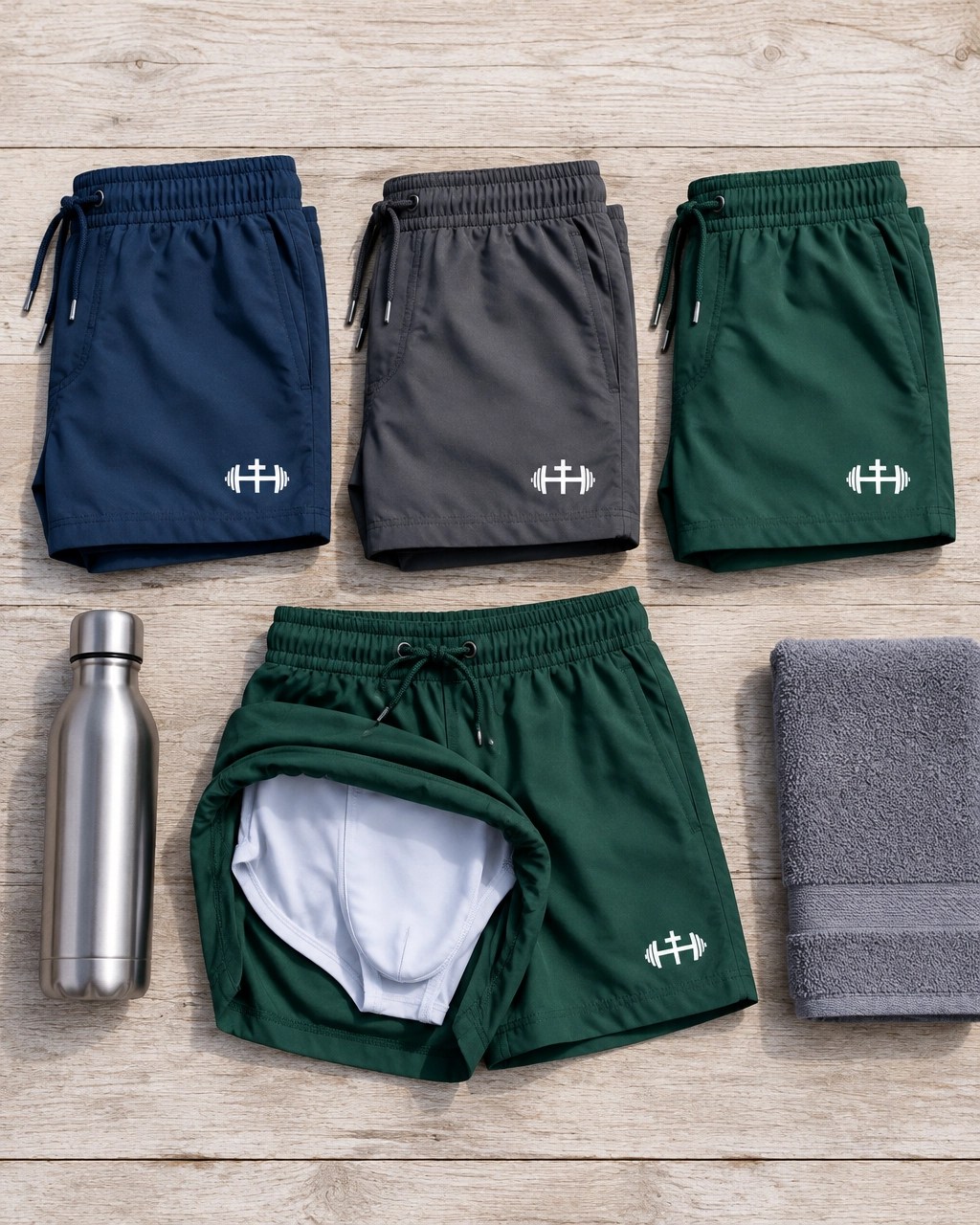
A boxer-brief liner covers more of the upper thigh and feels like a soft inner short. It can offer a secure, steady fit without open netting against the skin. It holds more water than mesh and may take longer to dry, but many people prefer that tradeoff for everyday comfort. Honor His House men’s swim trunks use a smooth built-in boxer-brief lining rather than open mesh. That choice favors comfort against the skin and a secure feel over the fastest possible drying time. Explore the men’s swim trunks.
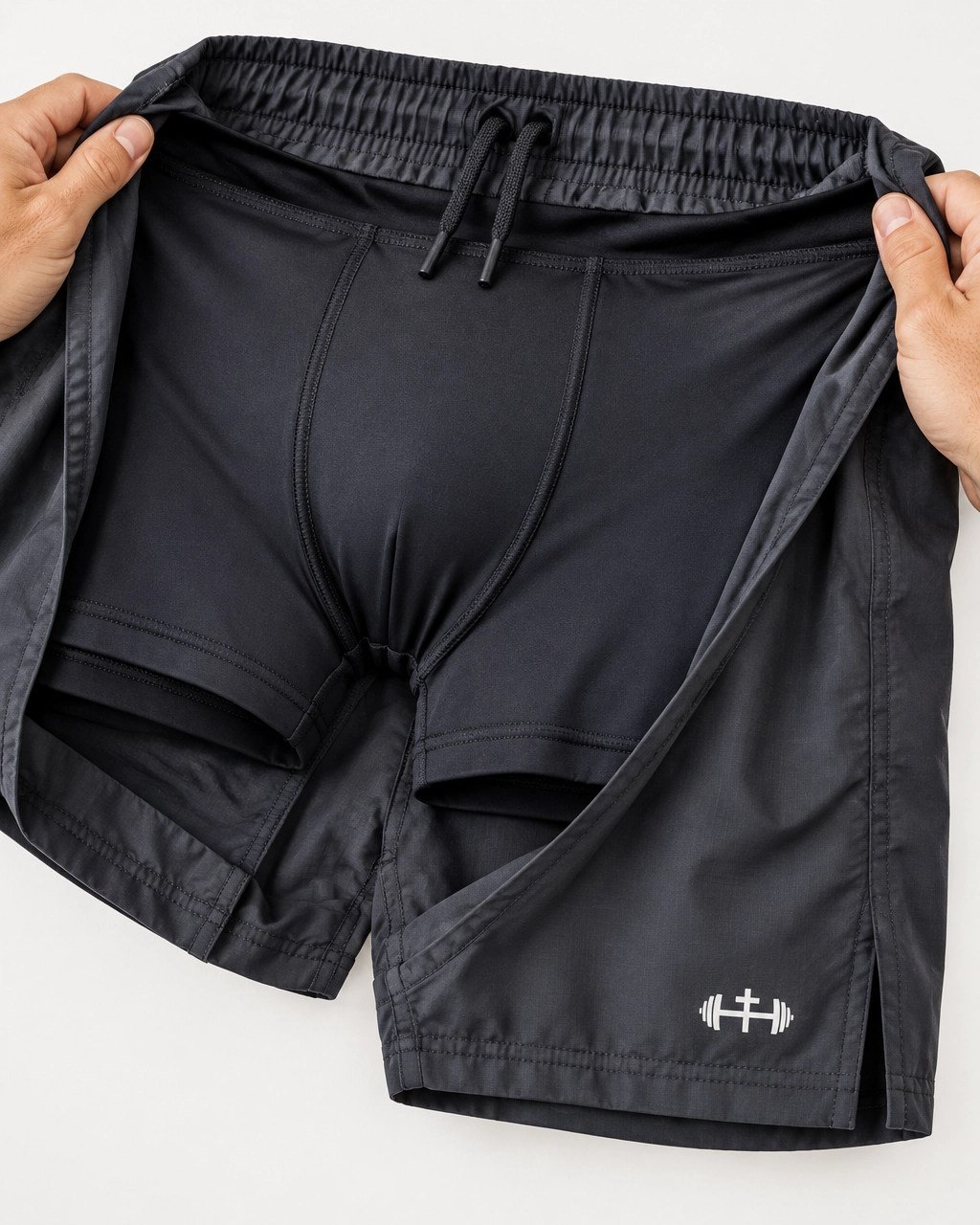
A compression liner is the closest-fitting option. It gives the most support and is least likely to shift when you swim or play in the water. Its snug fit is not for everyone, though, and it holds the most water of these lined styles and dries the slowest. It should feel supportive, not restrictive.
Unlined trunks have no inner layer. They feel roomy against the skin and avoid liner fabric holding water, so there is no separate lining to dry. But they do not offer the support or added coverage of a built-in liner. If you prefer this style, add a swim-specific underlayer that fits securely and dries well.
How To Tell A Good Liner From A Bad One Before You Buy
A good swim trunk liner should feel secure without squeezing. Check the leg openings first. They should sit smoothly against your thighs without digging in, gaping, or curling. Then bend, walk, or squat in the trunks if you can. A liner that rides up in the fitting room is unlikely to become more comfortable once it is wet.
Pay attention to where the seams sit. A bulky seam right along the inner thigh can become distracting with every step. Flat, well-placed seams are easier to forget about. Also check how the liner is attached. Some are fixed mainly at the waistband; others are sewn through more of the garment. Neither construction is automatically better, but a liner that twists or pulls when you move is a sign the fit or construction is not working for you.
When comparing a swim trunk liner or a swim shorts liner, remember that “snug” does not mean “tight.” A liner that is too tight can pull at the seams, dig into the leg openings, and restrict your movement. One that is slightly loose but stays in place is usually more comfortable than one pressing firmly against your skin. The right balance should feel steady, not like a compression garment unless that is what you chose.
Sizing, Briefly
A liner changes how a pair of trunks fits, and it is worth knowing that before you order. The outer short should fit the way any short fits you: room to move, no pulling across the hips, and enough length that it stays where you want it when you sit down. The liner is a closer garment inside that, so a pair that is already snug through the seat will feel tighter than you expect.
The leg opening is the measurement that matters most. If the liner is binding there before you get in the water, it will not loosen once it is wet. Order your usual size, check the leg openings first when the parcel arrives, and try the trunks on before you cut off any tags.
After The Water
Rinse your trunks in cool fresh water after swimming. A quick rinse gets the chlorine, salt, and sunscreen out of the lining before they have a chance to sit in the fabric. Hang them to dry in the air, and do not leave them bunched up wet in a bag on the drive home. Skip the hot dryer, especially for a lined suit. Heat is rough on stretch fabrics and elastic, and a liner is mostly stretch fabric.
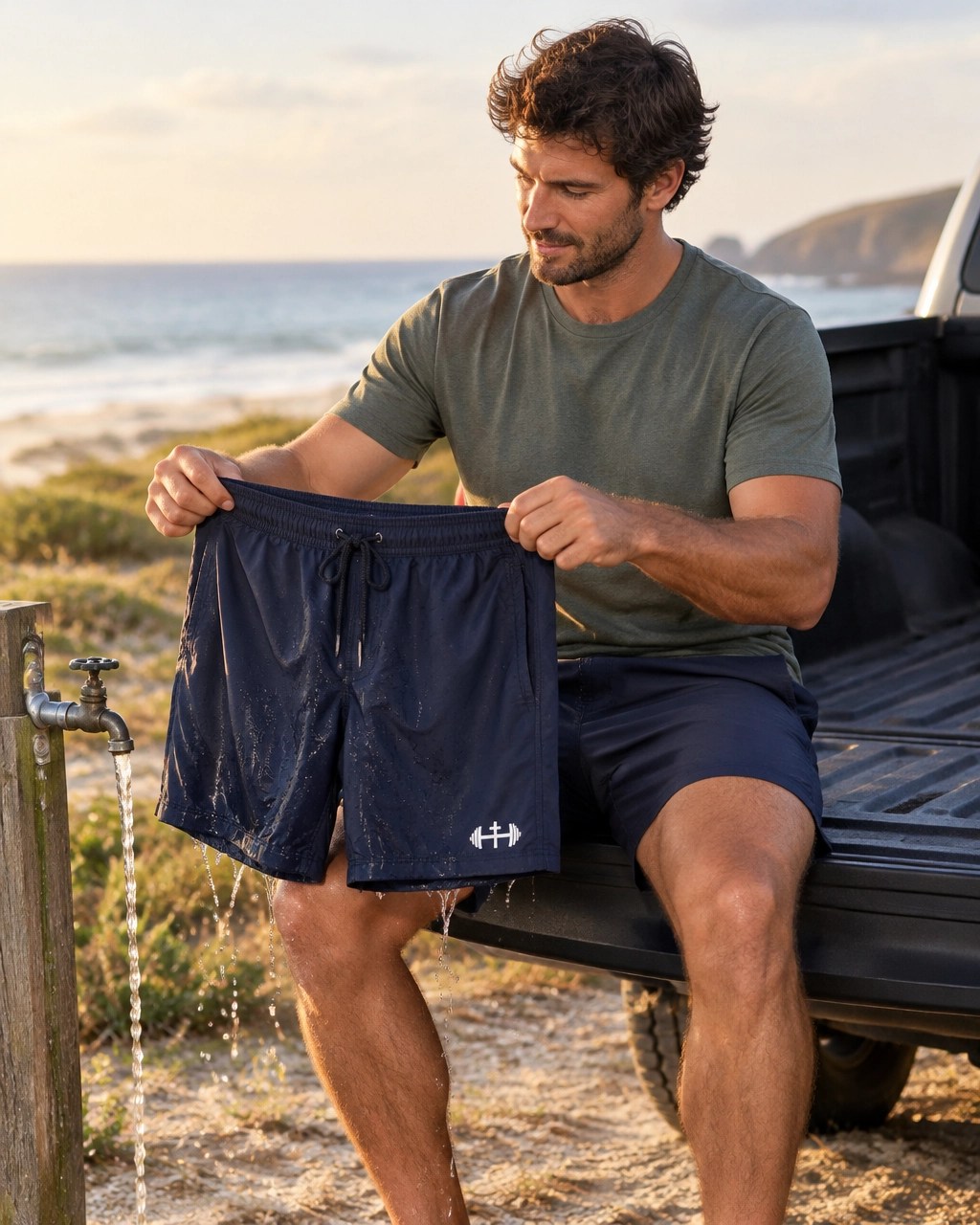
A lined suit that dries fully between wears will last longer and feel better on the next trip. That is the whole care routine. Everything past this point is optional.
More Than A Pair Of Trunks
If you are buying for two, the matching couples swimwear collection is built so you can choose coordinated sets rather than two unrelated suits. For her, the one-piece swimsuits and the high-waisted bikini sets follow the same thinking as the trunks: coverage and construction you stop noticing once you are in the water. You can browse the full women's swimwear collection to see the options side by side.
Honor His House sends 50% of all proceeds to wellness missions supporting physical, mental, and spiritual wellbeing. That is not a seasonal promotion. It is the reason the company exists. See where the mission goes.
The Hidden Layer
The Lord does not look at the things people look at. People look at the outward appearance, but the Lord looks at the heart. (1 Samuel 16:7, NIV)
Notice how ordinary the setting is. Samuel is sizing up Jesse's sons for a job, and God interrupts the audition to say the thing we keep forgetting: the part that decides everything is the part nobody can see.
It is a small thing to think about a lining while you read a verse about the heart. But the principle is the same one, in miniature. The hidden layer is what makes the visible one work. Nobody at the lake compliments a lining. They just notice that you are comfortable, that you are not adjusting anything, and that you are actually there.
Find Your Fit
Check the inside of the waistband before you buy. Choose the lining that matches how you actually use the water, not the one with the best marketing. Then stop thinking about it and go swim.
Wear your faith with purpose. Shop all swim and get ready for your next day at the water.
Leave a Reply