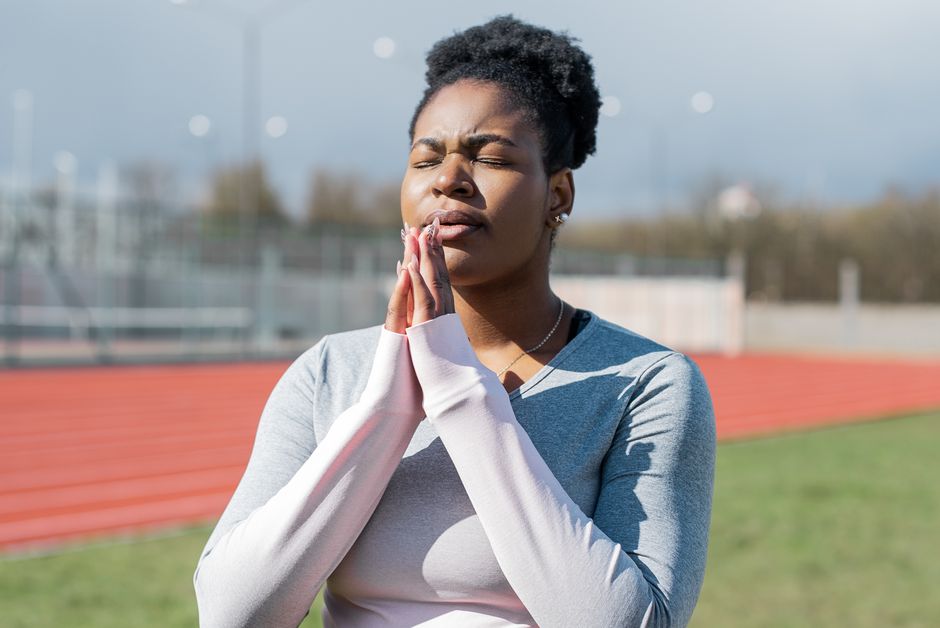
Many Christians live with a quiet tension. On Sunday morning, they hear that the body is a temple of the Holy Spirit. On Monday morning, they wonder if spending 45 minutes on a treadmill is selfish when they could be praying, serving, or studying Scripture instead. The guilt is real, and it has kept countless believers stuck between neglecting their health and feeling spiritually shallow for prioritizing it. That tension is unnecessary. Faith and fitness workouts are not two competing claims on your time. They are a single, integrated act of worship, and this guide will show you exactly how to bring them together. We will walk through the biblical foundation, practical workout structures, a comparison of the top faith-based fitness programs in 2026, nutrition guidance, and community strategies, filling the gaps that most online content leaves wide open.
Table of Contents
- What Does the Bible Say About Fitness and Exercise?
- The Rise of Faith-Based Fitness: Why Christians Are Combining Workouts with Worship
- How to Create Your Own Faith and Fitness Workout Routine
- Top Faith-Based Fitness Programs Compared (2026 Update)
- Nutrition and Meal Planning for the Faith-Driven Athlete
- Building Community: Group Workouts and Accountability Partners
- Frequently Asked Questions About Faith and Fitness Workouts
- Conclusion: Your Body Is a Temple—Train It for His Glory
What Does the Bible Say About Fitness and Exercise?
The most common question people ask is also the simplest: does Scripture even care about my workout? The answer is yes, and it is more robust than a single proof text. First Timothy 4:8 gets quoted often: “Physical training is good, but training for godliness is much better.” Some read that and conclude that exercise is a second-class activity, tolerated but not celebrated. That misreads Paul entirely. He calls physical training good. The Greek word he uses carries the sense of something beneficial, profitable, worthwhile. He is not dismissing the body; he is ranking priorities. Godliness matters more, but the body still matters.

First Corinthians 6:19-20 pushes the point further. Your body is a temple of the Holy Spirit. You were bought with a price. Therefore, honor God with your body. That is not a suggestion. It is a command with a theological anchor in the gospel itself. Caring for your physical health is a response to what Christ has done, not a distraction from it. Romans 12:1 then frames the whole of life, including your physical body, as a living sacrifice, holy and pleasing to God. And 1 Corinthians 10:31 ties it all together: whatever you do, whether you eat or drink, do it all to the glory of God. That includes your squats, your runs, your stretches, and your rest days. Scripture does not pit body against spirit. It calls for the stewardship of both, woven into a single life of worship.
The Rise of Faith-Based Fitness: Why Christians Are Combining Workouts with Worship
Something has shifted in the last few years. Christians are increasingly dissatisfied with secular fitness culture, which often sells vanity, comparison, and a quiet desperation to look a certain way. The messaging in most gyms and fitness apps is about earning your body, sculpting yourself, and proving your discipline. For a believer, that framework feels hollow at best and spiritually corrosive at worst. In response, a new wave of faith-based fitness platforms has emerged, and they are not a niche curiosity anymore.

FaithFit, founded by two former collegiate football players, builds entire workouts around Scripture passages like James 1:2-3 and 1 Corinthians 10:31. Shaped by Faith, a Telly Award-winning television program, reaches 39 million U.S. households through NRB TV and multiple international networks, offering low-impact workouts for all ages. Christ Glorified Fitness on YouTube has accumulated tens of thousands of views with series like “40 Days to Flourish,” designed to help women memorize Scripture while they move. Paul Eugene offers low-impact cardio with an explicitly biblical message about being transformed, not just evolving. These are not fringe experiments. They represent a mainstream movement of Christians who want their workouts to align with their worship, not compete with it. The core idea is simple and powerful: exercise can be an offering. When you move your body in gratitude to the God who gave it, you are not just burning calories. You are glorifying your Creator.
How to Create Your Own Faith and Fitness Workout Routine
You do not need a paid app or a specialized program to begin, though those can help. What you need is a simple, repeatable structure that integrates Scripture, prayer, and movement into a single session. Here is how to build one.
Start with Scripture: Choosing Your Workout Verses
The verse you choose sets the tone for the entire workout. Match the Scripture to the intensity of what you are about to do. For endurance sessions, James 1:2-3 works perfectly: “Count it all joy when you meet trials of various kinds, for you know that the testing of your faith produces steadfastness.” For strength training, Isaiah 40:31 promises that those who wait on the Lord will renew their strength. For moments when motivation lags, Philippians 4:13 is direct: “I can do all things through Christ who strengthens me.” Use 1 Corinthians 10:31 as a session-long mantra: “Whatever you do, do all to the glory of God.” Write your chosen verse on an index card and place it where you can see it. Set it as your phone lock screen. Speak it aloud between sets. The goal is not to multitask but to meditate. Let the words sink into your mind while your body works.
Structure Your Session: Prayer, Movement, Reflection
Begin with a five-minute warm-up. Use gentle stretches and deep breathing. Before you take your first step or lift any weight, pray. Dedicate the session to God. A simple prayer works best: “Lord, I offer this time to you. Strengthen my body and draw my heart closer to yours.” Let the prayer settle your mind and focus your intention.
Move into the main workout for 20 to 30 minutes. Alternate between exercise sets and Scripture recitation. During a set of squats, repeat Philippians 4:13 silently or aloud. During a plank hold, meditate on the promise that God’s power is made perfect in weakness. When you want to quit, let the verse carry you through. This is where the “devotional workout” concept comes alive. The physical effort becomes a context for spiritual formation. You are training your body and your faith simultaneously.
End with a five-minute cool-down. Stretch slowly. Breathe deeply. Close with a prayer of gratitude. Thank God for the ability to move, for the strength you just used, and for the health you are stewarding. This final prayer seals the session as an act of worship, not just a task checked off a list.
Low-Impact and Beginner-Friendly Options
Not everyone can or should jump into high-intensity training. If you are new to exercise, recovering from an injury, or dealing with joint pain, low-impact options are a wise and faithful place to start. Paul Eugene’s YouTube channel offers low-impact cardio workouts with a clear biblical message, and his companion channel provides seated fitness routines for those with limited mobility. FaithFit includes dedicated “Low Impact” and “Stretch” categories in their app.
Here is a sample low-impact circuit you can do at home. March in place for one minute while reciting your chosen verse. Follow with one minute of seated arm circles, keeping your movements slow and controlled. Do one minute of standing calf raises, using a chair for balance if needed. End the circuit with 30 seconds of prayerful deep breathing, inhaling gratitude and exhaling stress. Repeat the full circuit three times. This takes less than 15 minutes and requires no equipment. The point is not intensity. The point is faithful consistency.
Top Faith-Based Fitness Programs Compared (2026 Update)
With several strong options available, choosing the right program depends on your goals, budget, and preferred format. Here is how the leading platforms stack up in 2026.
FaithFit, available at faithandfitness.net and through their mobile app, was founded by two former collegiate football players from the University of Wisconsin and Susquehanna University. Their workouts are structured as devotional experiences, weaving Scripture, music, and prayer directly into the exercise session. The platform offers both free and paid tiers, making it accessible for those who want to sample before committing. FaithFit is particularly strong for men, though their content serves all adults.
Shaped by Faith is a Telly Award-winning television program with a unique distribution model. It airs on NRB TV, reaching 39 million U.S. households, as well as CTN and international networks like Grace TV India. The workouts are low-impact and designed for all ages, with a strong emphasis on community. Content is available via downloads, DVDs, and broadcast. The program targets Christian women specifically, though the gentle format works for anyone seeking accessible movement.
Christ Glorified Fitness operates primarily on YouTube, offering free video workouts for women led by a female trainer. The “40 Days to Flourish” series includes 24 workouts designed to help users memorize Scripture while exercising. This is the best option for budget-conscious users who want high-quality, biblically grounded content without a subscription fee.
Paul Eugene’s YouTube channel provides low-impact cardio workouts with a distinctive message: believers are being transformed into the image of Christ, not merely evolving. His content is ideal for seniors, beginners, and anyone with joint concerns. A companion seated fitness channel extends accessibility further.
A comparison table helps clarify the differences. FaithFit suits those wanting a structured app with devotional depth, available in free and paid tiers, with strong Scripture integration. Shaped by Faith fits women and all ages seeking low-impact, community-oriented content via TV, downloads, and DVDs. Christ Glorified Fitness is best for budget-conscious women wanting free YouTube workouts with Scripture memorization. Paul Eugene serves seniors and beginners needing low-impact cardio with a biblical message, free on YouTube.
One notable gap remains: no single program currently offers comprehensive nutrition guidance, fitness programming, and community features for all ages and both genders in one place. That represents a real opportunity for His House to position itself as a holistic resource.
Nutrition and Meal Planning for the Faith-Driven Athlete
Most faith-based fitness content stops at exercise. That is a significant gap. What you eat is part of how you steward your body, and Scripture has more to say about food than most people realize. The principle is simple: eat more food that God made. Whole fruits, vegetables, lean proteins, whole grains, nuts, and seeds are gifts from the Creator, designed to nourish the bodies He gave you. This is not about legalism or a rigid diet plan. It is about gratitude and wisdom.
Consider a sample day. For breakfast, a bowl of oatmeal with fresh berries and a handful of walnuts. Before you eat, read Psalm 34:8: “Taste and see that the Lord is good.” Let the act of eating become a moment of worship. For lunch, a grilled chicken salad with mixed greens, cucumbers, tomatoes, and a simple olive oil dressing. Reflect on 1 Corinthians 6:19-20. Your body is a temple. What you put into it matters. For dinner, baked salmon with quinoa and roasted vegetables. End the meal with a prayer of thanks, not as a ritual but as a genuine acknowledgment that every good gift comes from God.
Avoid the trap of guilt. If you eat something that does not fit the ideal, receive grace and move on. This is not a performance. It is a practice. The goal is to honor God with your choices, not to earn His favor through your plate. Freedom and wisdom walk together here.
Building Community: Group Workouts and Accountability Partners
Most faith and fitness content focuses on individual routines. But the Christian life was never meant to be lived alone, and your fitness journey will be stronger and more sustainable when shared. Ecclesiastes 4:9-10 says it plainly: “Two are better than one, because they have a good reward for their toil. For if they fall, one will lift up his fellow.” That applies to your workout as much as to any other area of discipleship.
Start a Faith and Fitness small group at your church. Meet once a week for a 30-minute workout followed by a short Bible study. Use a free YouTube video from Christ Glorified Fitness or Paul Eugene if no one in the group is comfortable leading the exercise portion. Keep the atmosphere welcoming for all fitness levels. The point is connection, not competition.
If an in-person group is not feasible, find an accountability partner. Choose someone who shares your fitness and faith goals. Text each other a Scripture verse before your workout. Send a quick check-in afterward. Knowing someone is expecting to hear from you adds a layer of motivation that no app can replicate. Online communities also exist. FaithFit includes community features in their app, and private Facebook groups dedicated to faith-based fitness are growing. The method matters less than the commitment to not go it alone.
Frequently Asked Questions About Faith and Fitness Workouts
Is it biblical to exercise for appearance? The heart motive matters most. First Samuel 16:7 reminds us that God looks at the heart, not the outward appearance. At the same time, caring for your body honors God. The balance is this: it is not wrong to want to look healthy, but when appearance becomes an idol that drives anxiety, comparison, or disordered behavior, it has crossed a line. Check your heart regularly. Ask God to purify your motives.
Can working out be a form of worship? Absolutely. Romans 12:1 calls your whole body a living sacrifice. First Corinthians 10:31 commands you to do everything, including physical activity, for God’s glory. When you offer your effort to God with a grateful heart, your workout becomes worship. The sweat and the prayer are not separate. They are one offering.
How do I start a Christian fitness routine if I am out of shape? Begin where you are, not where you wish you were. Start with low-impact options like Paul Eugene’s videos or the Shaped by Faith program. Commit to just 10 minutes, three times per week. Focus on consistency, not intensity. Pray for endurance before each session. Your body will adapt over time. The goal is faithful stewardship, not rapid transformation.
What if I miss a workout? Grace, not guilt. Lamentations 3:22-23 says God’s mercies are new every morning. Tomorrow is a fresh start. Do not let a missed day become a missed week because shame kept you away. Receive the gift of a new beginning and keep going.
Conclusion: Your Body Is a Temple—Train It for His Glory
Faith and fitness workouts are not a trend to follow or a box to check. They are a biblical lifestyle of honoring God with your whole self: spirit, mind, and body. The tension you may have felt between physical health and spiritual devotion was never required. Those two pursuits belong together, each strengthening the other. Choose one program from the comparison section above. Start with a 10-minute prayerful workout today, perhaps in a pair of men’s His House Holy Heritage athletic shoes that remind you of your purpose with every step. Commit to one week of combining Scripture with movement. Bring your water in a His House stainless steel water bottle as a small, tangible reminder that even hydration is part of your stewardship. Whether you eat or drink, or whatever you do, do all to the glory of God. Your next workout can be an offering. Let it be one.
Leave a Reply