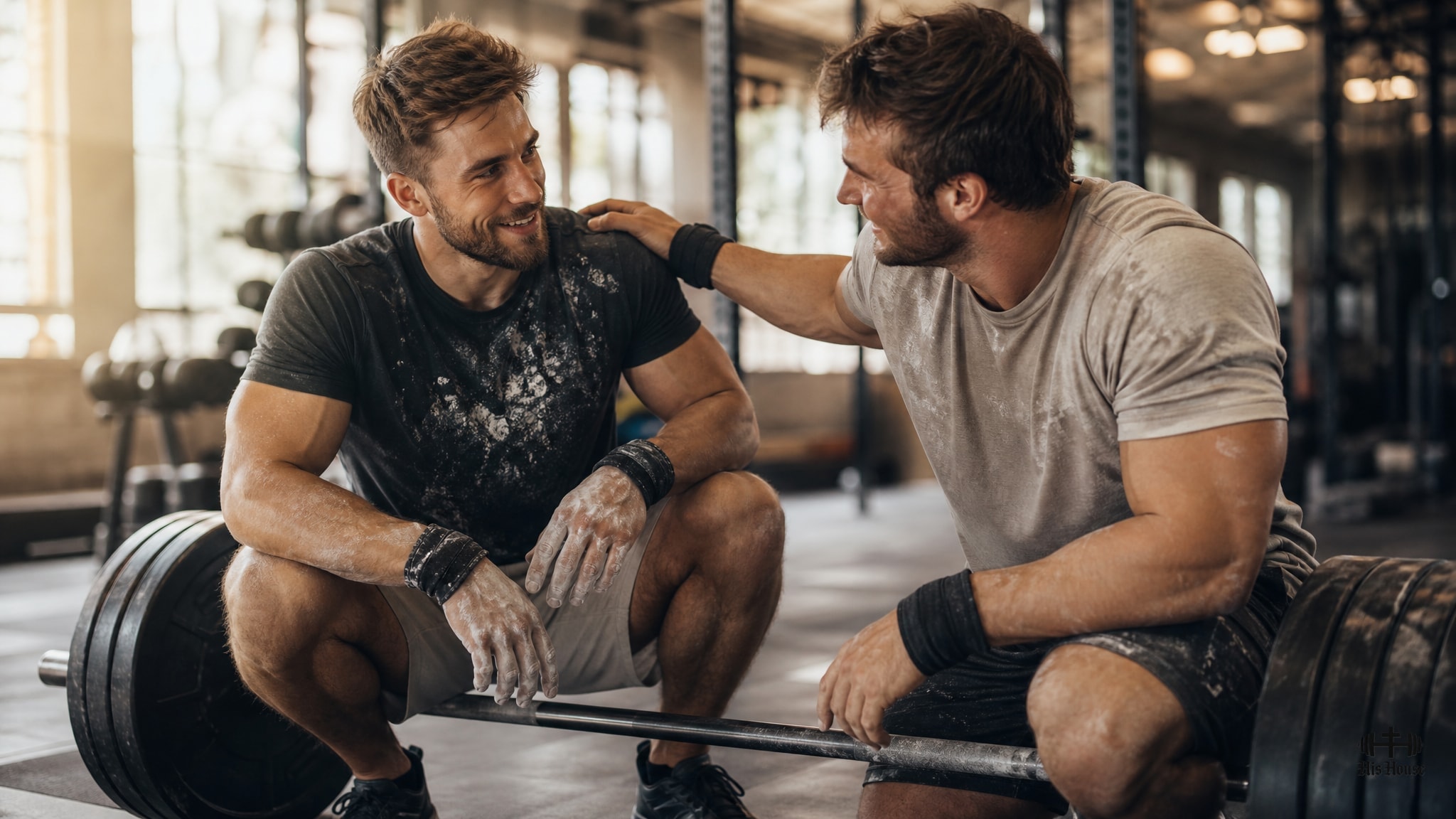
The gym gets treated as a sanctuary of self. For believers, it’s meant for more than that. We believe training is an act of worship, and the community you build within those walls matters just as much as the weight on the bar. Fitness culture often isolates people in vanity. Faith-centered training reorients effort toward stewardship and mutual edification instead. That shift changes everything, from how you pick your gear to who you choose to sweat beside.
Christian gym apparel matters far beyond fabric and fit because it signals where your true allegiance lies. Pair that visual testimony with the biblical principle of iron sharpens iron, and the workout becomes a crucible for spiritual growth, not just maintenance. You’re not only building muscle. You’re building a life that reflects Christ in every rep and every recovery period.
The Spiritual Weight of Training Partners
Choosing a training partner is a spiritual decision. It shapes the trajectory of your character over time. The proverb “iron sharpens iron” describes active friction that refines character, not just physical performance or personal records. That sharpening requires contact, resistance, and a shared foundation, or the blade dulls against softer materials.
Biblical Foundation of Mutual Accountability
Scripture treats accountability as non-negotiable in the Christian walk, and that applies directly to your fitness journey. Ecclesiastes reminds us that two are better than one because they have a good return for their labor, and if either falls, one can help the other up. That mutual reliance creates a safety net that catches you when motivation fades or discipline wavers. Training with an accountable partner increases adherence to long-term fitness goals compared to training solo, because the commitment goes beyond personal willpower. You show up not just for yourself, but because someone else is counting on your presence and your integrity.
Shared Struggle Builds Deeper Bonds
Suffering together in a controlled environment like the gym builds relational depth faster than casual conversation ever could. Push through physical exhaustion alongside another believer, and pretense falls away, revealing real character. That vulnerability opens the door to couples bonding through fitness or to deep friendships rooted in shared endurance rather than shared interests. The struggle validates the relationship. It proves both people are willing to endure discomfort for something bigger.
True partnership demands honesty that feels uncomfortable but produces the growth you actually need.
Christian Gym Apparel as a Conversation Starter
Your clothing speaks before you say a word, even in gyms that can feel hostile to faith. Scripture-based apparel in commercial gyms often sparks organic conversations about faith during rest intervals between sets, because it breaks the unspoken barrier of anonymity. This isn’t about preaching at strangers. It’s about giving people a visible anchor point when they’re looking for connection.
Signaling Values in Secular Spaces
Gym culture usually prioritizes appearance and performance above everything else, which keeps spiritual values hidden. Faith-driven clothing disrupts that norm. It introduces a third dimension to the space without demanding attention. It acts as a filter, drawing like-minded people closer while signaling to everyone else that you operate under a different authority. You wear these values not to judge the room, but to be known within it.
Inviting Dialogue Through Design
Design choices matter because they decide whether your apparel invites curiosity or shuts conversation down. Subtle, modern typography and clean aesthetics let people approach with genuine questions instead of defensive assumptions. We design apparel meant to carry meaning beyond fashion, so the clothing becomes a quiet statement of belief for anyone who wants to represent their values. A well-placed verse or symbol on scripture t-shirts for the gym opens the door for gospel-centered conversations in moments when guards are naturally lower.
That visibility doesn’t guarantee a warm reception from everyone in the room.
Identity Over Aesthetics in Fitness Culture
Mainstream fitness worships the body as an end in itself. We train to honor the One who gave it to us. Viewing fitness as stewardship sets our approach apart from body-image culture, because the goal is capacity for service, not admiration from others. That perspective frees you from the exhausting comparison cycle that defines so much of modern wellness.
Stewardship means caring for the temple of the Holy Spirit with the same diligence you’d give any sacred trust. Once aesthetics take a back seat to function and health, vanity loses its grip on your motivation. You stop asking how you look and start asking what you’re capable of doing for God’s kingdom. That reorientation turns training for stewardship into a practice that survives aging, injury, and cultural shifts.
Vanity builds fragile identities. They crumble the moment physical peak passes.
Building a Faith-Centered Workout Routine
Integrating faith into fitness takes intentional habits, not vague sentiments. Practical steps help anchor prayer and intentionality to physical cues you already follow during a workout. That keeps your faith from becoming compartmentalized or performative during training.
Prayer and Intentionality Before Lifting
Start each session with a specific prayer that dedicates your effort to God’s glory rather than personal achievement. It takes less than thirty seconds and resets your entire mindset before you touch a weight. Ask for strength to steward your body well, and for awareness of chances to encourage the people around you. Intentionality turns repetitive motion into mindful worship, engaging spirit and body at once.
Rest as Spiritual Discipline
Rest periods between sets are built-in moments for reflection that most lifters fill with phone scrolling instead. Use this down time for spiritual health to practice gratitude, recite scripture, or simply breathe in awareness of God’s presence. Rest isn’t wasted time. It’s recovery that mirrors the Sabbath principle woven into creation itself. Honoring rest protects you from burnout and reminds you your worth isn’t tied to constant output.
Discipline without rest eventually breaks the vessel it’s supposed to strengthen.
Wearing Something That Means Something
Clothing works as both external testimony and internal anchor once the weights get heavy and focus drifts. Faith-based clothing reinforces truth in moments when feelings contradict scripture, working as both a personal reminder and a public testimony. The fabric against your skin becomes a tactile cue to remember who you belong to.
Apparel as Personal Reminder
During a hard set, when doubt creeps in, seeing a verse on your own sleeve can redirect your mind toward eternal truth. That’s not magical thinking. It’s cognitive reinforcement, aligning your thoughts with your beliefs under stress. The message you wear speaks to you first, before it ever reaches anyone else in the room. Internal conviction has to come before external expression, or the whole thing falls apart under scrutiny.
Representing Beliefs Modernly
Faith expression doesn’t need to look outdated or overly traditional to be genuinely reverent. Modern faith-driven workout wear lets younger generations live out their beliefs in the spaces where they actually spend time. Authentic representation meets people where they are without watering down the message. You can be fully Christian and fully engaged in contemporary fitness culture, no compromise required on either side.
Tradition has value, but relevance decides whether the message lands today.
Stewardship of Body and Community
Physical discipline connects directly to the biblical mandate of caring for the temple of the Holy Spirit. Your body isn’t yours to neglect or to idolize. It’s entrusted to you for purposes bigger than yourself. Community accountability extends that stewardship outward, making your private discipline visible and supported by people who share your mission.
Loving your neighbor means helping them steward their own bodies too, through encouragement and correction. That mutual care reflects the body of Christ working as designed, each part supporting the others in weakness and celebrating strength. Isolation breeds complacency. Community builds the perseverance that outlasts individual motivation. You can’t fulfill this mandate alone, because stewardship was never meant to be solitary.
Accountability requires the humility to receive correction well.
Finding Your Tribe Through Shared Mission
Consistent visual and verbal alignment attracts the right training partners over time, filtering out mismatched values early. True community stretches beyond the workout into daily life and spiritual growth, because a shared mission builds bonds that outlast shared hobbies. Finding your tribe isn’t networking. It’s recognizing fellow laborers in the same field.
Beyond the Gym Floor
Relationships forged in sweat need to translate into support outside the gym to mean anything long-term. Check in on each other’s marriages, careers, and walks with God with the same consistency you track workout logs. The gym is the connection point, but life is the testing ground where real faith gets proven. Surface-level gym friendships fade when schedules change. Covenant relationships survive seasons of distance and difficulty.
Consistency in Message and Action
What you wear and what you do have to line up over years, not weeks, for credibility to take root. People notice when your apparel claims one thing and your behavior shows another, and that gap undermines your witness more than silence ever could. Integrity is the cumulative result of small choices made faithfully when nobody’s watching. Your tribe forms around that consistency, because it offers something rare in a culture built on performance and pretense.
Trust is earned through repeated alignment between word and deed.
Leave a Reply